Inside the Alcazaba Malaga: Palace, Gardens and Views
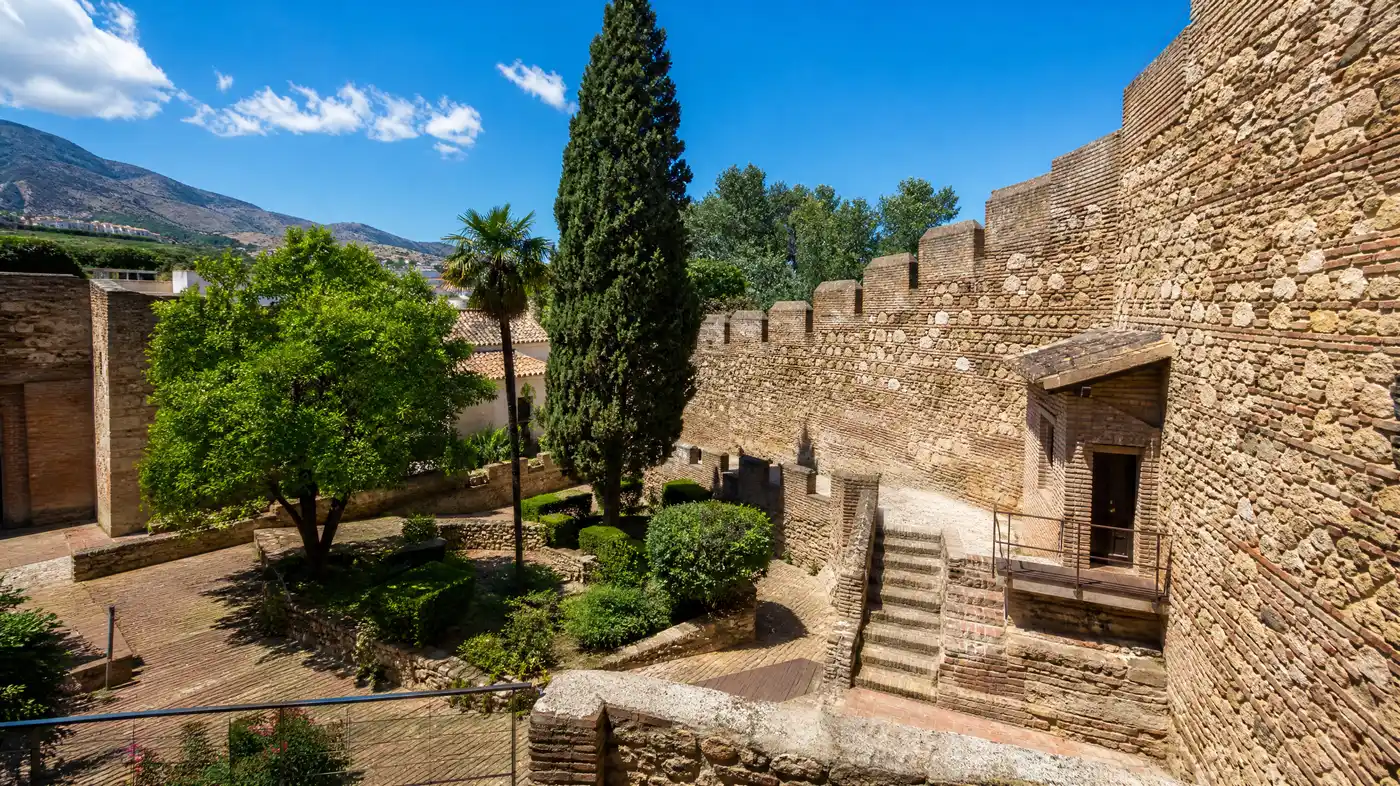
Stepping past the outer ticket booth at Calle Alcazabilla, the roar of coastal traffic drops away almost instantly. What you find when exploring the alcazaba malaga inside is a staggered, vertical world of quiet courtyards, rough limestone ramps, and running water that feels entirely detached from the modern beach town below. It was constructed primarily during the 11th century under the Taifa ruler Badis ben Habus, though its footprint was altered and reinforced right up through the Nasrid dynasty.
Most people arrive expecting a dusty garrison or a straightforward military fort. Instead, you get a layered maze of fortified gates, terraced orchards, and delicate palace chambers perched right over the Mediterranean. You could easily rush through the grounds in 40 minutes if you were running for a train. Give it two hours, though, and the compound unfolds like an intricate puzzle of medieval Moorish engineering and tranquil domestic retreats.
Book your alcazaba malaga experience:
Entering the Lower Enclosure and the Fortified Gates
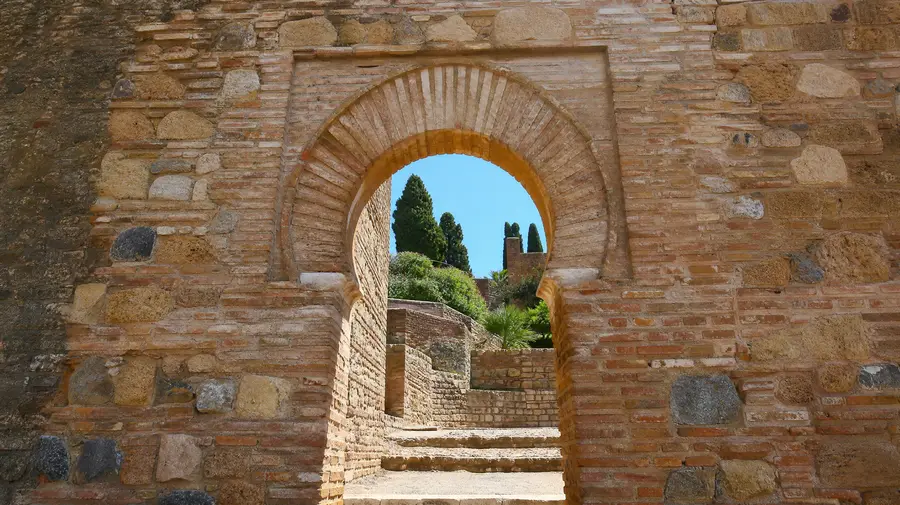
The climb begins along a sloping zigzag of polished river cobblestones. Military architects deliberately built these tight doglegs so that invading forces could never charge directly through the gates with a battering ram. As you walk up through the Puerta de la Bóveda (Vault Gate), look up at the vaulting overhead. It makes a sharp ninety-degree turn designed to expose an attacker's unshielded right flank to archers stationed on the battlements above.
Further up sits the Puerta de las Columnas. If you look closely at the doorjambs, you will see marble Roman columns and carved capitals wedged horizontally into the Moorish stonework. The builders simply stripped raw materials from the ruins of the Malaga Roman Theatre resting directly beneath the hillside. It is a striking sight, seeing classical Roman fluting holding up an Islamic horseshoe arch. These stones have held up under sieges, neglect, and hundreds of years of salty sea air.
The lower ramparts feel heavily defensive. Tall outer towers shield the walkway, and the walls are thick, rough, and functional. You hear the wind whipping up from the cruise port before you can actually see the water. The climb is somewhat steep, rising about 60 meters from the street level to the inner palace, but the path is wide enough that you can step aside and catch your breath under the cypress trees.
Note: The cobblestones on the lower ramps have been worn slick by centuries of foot traffic. Wear shoes with genuine grip, especially if morning dew or evening irrigation has left the stones damp.
Wandering the Alcazaba Gardens Malaga
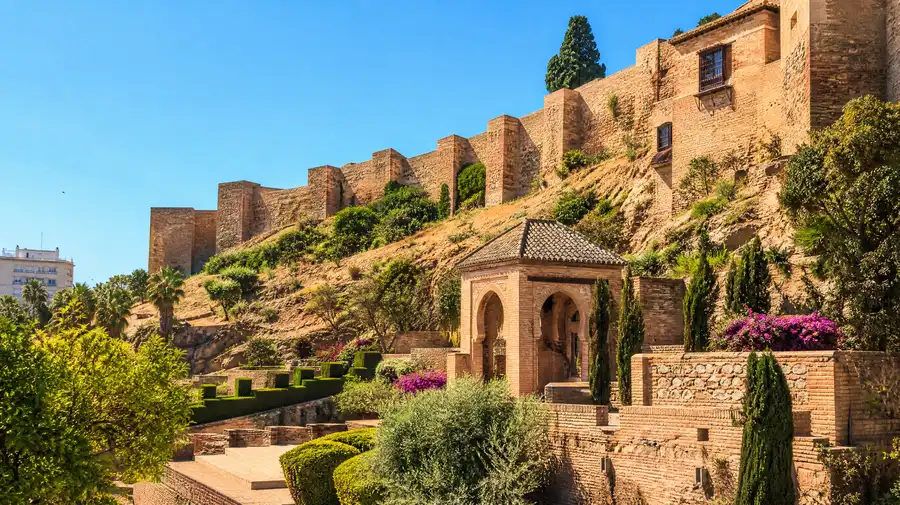
Once you break through the defensive curtain into the intermediate terraces, the limestone gives way to the lush greenery of the alcazaba gardens malaga. Even in the sweltering heat of mid-July, when downtown temperatures hit 35 degrees, the temperature inside these terraced green spaces stays noticeably cooler. Water runs everywhere here. Small brick channels cut directly into the paving guide fresh streams toward shallow reflecting basins and bubbling fountains.
The scent hits you before you even notice the individual plants. Depending on the month you wander through, the air smells of sweet jasmine, crushed pine needles, bitter orange blossoms, or damp terracotta. The planting scheme is not strictly medieval, since much of it was restored during the early twentieth century under architect Leopoldo Torres Balbás, but it closely mirrors the agricultural luxury the original inhabitants craved. Pomegranate trees, towering date palms, and cascading bougainvillea soften the stark masonry walls.
- Fountain of the Mermaid: a quiet, shaded marble basin tucked beneath leafy pergolas, popular for a quiet breather.
- Plaza de Armas gardens: a broader open terrace filled with manicured box hedges, rose bushes, and tall cypress stands overlooking the sea.
- Terrace irrigation rills: gravity-fed brick waterways built directly into the footpaths, mimicking classical Andalusian water architecture.
- Citrus groves: clusters of Seville orange trees that drop bright, bitter fruit across the pathways every winter.
I like sitting on the low stone benches near the southern perimeter of these gardens. The sound of water running through the open channels cuts out the rumble of tourist buses on the Paseo del Parque below. You can watch sparrows splashing in the tile basins while looking out across the harbor. It feels contemplative and unhurried.
The Alcazaba Palace Malaga and the Nasrid Courtyards
Passing through the Puerta de los Arcos brings you into the innermost sanctum: the alcazaba palace malaga. This was the residence of the Muslim governors and visiting dignitaries. While it lacks the sheer scale of Granada's Alhambra, the alcazaba malaga interior possesses an intimate, domestic quality that many large monuments lose. The residential area is split between older Taifa ruins and the more ornate 14th-century Nasrid reconstruction known as the Cuartos de Granada.
The heart of this palace sector is the Patio de los Surtidores (Courtyard of the Jets). A long rectangular pool sits centered between sculpted plaster arches, reflecting the sky and the surrounding brickwork. Step through the central arcade into the adjoining chamber, and you will notice carved polylobed arches with geometric stucco patterns. Traces of original pigment still cling to the deeper recesses of the plasterwork. The craftsmanship is staggering when you consider this was an outpost palace, not the primary royal court of the kingdom.
Pro tip: Peek through the pierced wooden window screens (mashrabiya) in the northern palace room. They frame postcard views of the city hills while keeping the harsh midday sun off your skin.
Just past the main rooms lies the Patio de los Naranjos (Orange Courtyard). This secluded quadrangle feels like a hidden family cloister. An ancient ceramic collection is housed in a small museum wing adjoining these rooms, displaying restored pottery, glazed tiles, and cooking vessels recovered during archaeological digs on the hill. The overall atmosphere inside the interior alcazaba de malaga residential quarters is quiet, cool, and surprisingly humble compared to modern palaces.
Book your alcazaba malaga experience:
Finding the Best Alcazaba Malaga View Points
Walking the battlements delivers some of the finest panorama points anywhere on the Costa del Sol. Because the fortress grips the western flank of Mount Gibralfaro, every turn of the outer rampart presents a radically different angle on the town. Look directly west and you stare straight down into the bowl of the Roman amphitheater, where visitors look like tiny moving figurines on ancient stone tiers.
Follow the wall toward the southern edge, and you get an unobstructed alcazaba malaga view across the Mediterranean. From this vantage point, you can watch passenger ferries backing out of their berths for the overnight run across to Melilla. Below your feet lies the lush green canopy of the Alameda park, with the docks of Muelle Uno stretching out into the blue bay. The breeze up here can be brisk, sweeping in salt spray from the open sea.
If you face north-west, the grand unfinished tower of Malaga Cathedral (La Manquita) rises high above the terracotta rooftops of the historic quarter. From the ramparts, you stand roughly level with the cathedral roofline. Looking further uphill, you will see the rugged defensive curtain walls snaking up the pine-studded ridge toward the Castillo de Gibralfaro above. It provides an incredible sense of scale that you miss completely from the city streets.
Navigating the Citadel: Zones and an Alcazaba Malaga Map Breakdown
Without an alcazaba malaga map in your hand, the compound can feel disorienting because you are constantly climbing, turning, and descending through defensive doglegs. The entire site is arranged in three distinct tiered zones, each built with its own security functions and character. Understanding this vertical layout makes it much easier to pace your visit and ensure you do not miss the higher courtyards.
| Citadel Zone | Primary Highlights | Estimated Time | Walking Surface |
|---|---|---|---|
| Lower Enclosure | Puerta de la Bóveda, Roman columns, zig-zag ramps | 25 mins | Cobblestones, moderate incline |
| Intermediate Terraces | Lush water gardens, Fountain of the Mermaid, sea terraces | 35 mins | Brick paving, flat gravel paths |
| Upper Palace Enclosure | Cuartos de Granada, Patio de los Surtidores, museum | 40 mins | Smooth tile, low stone door thresholds |
The climb is continuous, but the transitions between these areas are logical once you recognize the defensive checkpoints. Keep these simple orientation rules in mind as you make your way through the site:
- Follow the rising water channels: the brick irrigation runs lead naturally upward toward the palace reservoirs.
- Do not miss the Torre del Homenaje: located at the highest point of the inner enclosure, it affords the grandest inland view.
- Locate the municipal elevator: if climbing the lower ramps sounds daunting, an elevator operates from Calle Guillén Sotelo behind the city hall directly to the upper palace level.
- Save time for the western battlements: most visitors get distracted by the palace rooms and skip the wall walks facing the port.
The whole compound covers roughly 15,000 square meters. It is compact enough that you will not genuinely get lost, but expansive enough that quiet corners remain empty even on busy afternoons.
Frequently Asked Questions about alcazaba malaga inside
How long does it take to walk through the Alcazaba inside?
Most travelers spend between 75 and 90 minutes exploring the ramps, gardens, and palace rooms at a relaxed pace. If you are a photography enthusiast or enjoy sitting in the courtyards, set aside two hours.
Is the interior of the Alcazaba wheelchair accessible?
Accessibility is very limited due to the historical architecture. While a public elevator takes you to the upper palace level from Calle Guillén Sotelo, the inner gardens and ramparts feature numerous stone steps, narrow portals, and uneven river stones.
Can you walk directly from inside the Alcazaba to Gibralfaro Castle?
No, there is no direct access between the two monuments from inside the walls. You must exit the Alcazaba and hike the steep outdoor path (La Coracha) along the exterior hill or take the local number 35 bus from the city center.
Quick Reference
- Entrance via Calle Alcazabilla or the rear elevator
- Average visit duration: 75 to 90 minutes
- Main feature: 11th-century Taifa and 14th-century Nasrid palace
- Footwear requirement: sturdy soles with reliable traction
Book your alcazaba malaga experience:
My Take
Malaga has plenty of sun-drenched rooftop bars and beach chiringuitos, but walking past the gates of this fortress gives you something entirely different. It offers quiet, shade, and a physical connection to the eight centuries of Islamic history that shaped Andalusia. Grab a bottle of cold water from the kiosk outside, take your time ascending the stone ramps, and linger in the Orange Courtyard until the crowds clear out.
Read more about alcazaba malaga.